The best dentist for wisdom tooth removal near Narre Warren is the one willing to tell you when not to remove your wisdom teeth. Plenty of wisdom teeth come out unnecessarily, and plenty stay in mouths where they really should not.
At Smile Lounge in Narre Warren, the first thing we do at a wisdom tooth consultation is decide whether the tooth needs to come out at all, using a clinical examination and CBCT 3D imaging when the position calls for it. If extraction is the right call, we then talk through how complex the case is and what sedation options you have.
Here is how to think about the diagnostic decision, what makes a wisdom tooth case simple versus surgical, and what recovery actually looks like.
The Right Wisdom Tooth Removal Might Be No Removal at All
Wisdom teeth are not automatically problems. Some sit perfectly upright, function normally, and never give trouble. Some are partly through and at risk of recurring infections. Some are impacted at angles that will cause problems later. The job of a good wisdom tooth consultation is to work out which category each of your teeth falls into.
A practice that books you in for four extractions without imaging the angles, the roots, and the nerve proximity is not making a careful clinical decision. They are running a default. The default may even be right for your mouth, but you deserve to know it was thought through.
If your wisdom teeth are not causing problems and the imaging shows nothing concerning, leaving them in is often the most sensible call.
When Wisdom Teeth Actually Need to Come Out
The clinical reasons for removing a wisdom tooth fall into a few clear categories:
- Recurrent infection. A partly erupted wisdom tooth that traps food and gets infected repeatedly is rarely worth keeping.
- Decay or gum disease. Wisdom teeth at the very back are hard to clean. If decay is already established and progressing, treatment is often more difficult than removal.
- Damage to the next tooth. Impacted wisdom teeth can push on the second molar in front, causing decay or resorption that the patient does not feel until it is advanced.
- Cysts or pathology on imaging. Sometimes a CBCT scan picks up something that needs action regardless of symptoms.
- Orthodontic planning. In some cases, removing wisdom teeth is part of a broader orthodontic plan.
If none of these apply, removing the tooth is a decision worth questioning.
Simple Extraction vs Surgical Extraction: Why the Two Are Different
Not every wisdom tooth extraction is the same procedure. The spectrum runs from very simple to genuinely surgical.
A fully erupted upper wisdom tooth with a straight root often comes out in minutes, much like any other extraction. A horizontally impacted lower wisdom tooth lying against the nerve is a different proposition altogether. It needs to be sectioned, often surgically uncovered, and removed in pieces, with careful planning to avoid the inferior alveolar nerve.
The fee reflects the complexity. So do the time, the recovery, and the appropriate sedation level. A practice quoting the same fee for both is either undercharging the surgical case or overcharging the simple one.
A good wisdom tooth consultation includes a clear explanation of which category each tooth falls into and what that means for time, cost, and recovery.
What Makes a Good Wisdom Tooth Extraction
Once a wisdom tooth has been correctly identified as needing removal, four things make the procedure go well:
- CBCT 3D imaging for lower wisdoms. A flat x-ray does not show how close the root is to the inferior alveolar nerve. A 3D scan does. Skipping this on a complex lower impaction is not modern practice.
- Surgical experience. Surgical wisdom tooth extractions need a steady hand and good judgement on when to section the tooth, when to lift the flap, and when to refer to a specialist oral surgeon.
- Proper irrigation and closure. Cleaning the socket carefully and closing it neatly reduces the risk of dry socket and speeds recovery.
- Post-op aftercare instructions in writing. Verbal instructions get forgotten by the time you are home with a numb mouth.
These are not optional. They are what separates a competent extraction from a rushed one.
For Anxious Patients: Sleep Dentistry Is an Option
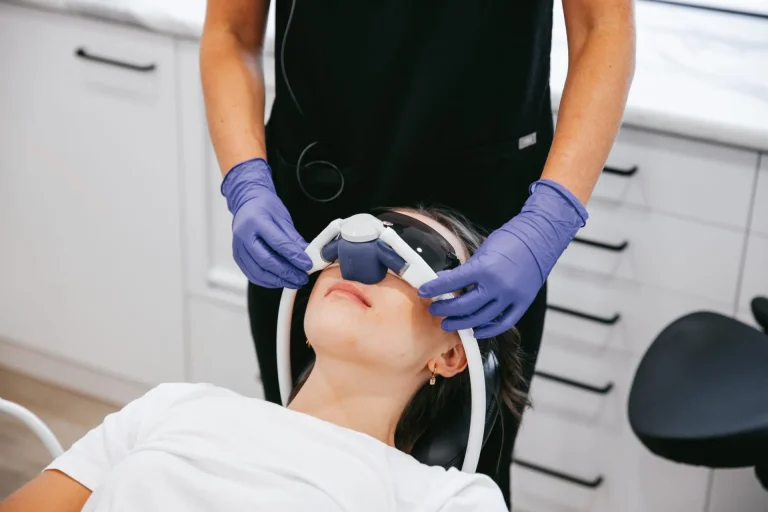
Wisdom tooth removal is one of the most common reasons patients ask about sleep dentistry. The combination of surgical sound, time in the chair, and the anxiety many people carry about the procedure makes sedation a useful option.
At Smile Lounge our in-house general anaesthesia facility means a full set of wisdom teeth can be removed in a single sedated appointment, administered by a qualified anaesthetist. Sleep dentistry adds to the overall fee and suits some cases better than others, so the consultation is where to discuss whether it fits you.
What Recovery Actually Looks Like
A simple wisdom tooth extraction usually has a few days of mild swelling and tenderness, manageable with over-the-counter painkillers. A surgical case has more swelling and a slightly longer recovery, usually peaking around day two or three and settling within a week.
A few realities worth knowing:
- Dry socket is a known risk after lower wisdom tooth removal, particularly for smokers and patients who do not follow aftercare instructions. Not common but real.
- Numbness of the lip or tongue can occasionally occur with lower wisdoms because of nerve proximity. Usually temporary but warrants a follow-up.
- Infection is uncommon with good aftercare. Following the post-op instructions matters.
Anyone who promises a recovery without these possibilities is overselling.
How We Approach Wisdom Teeth at Smile Lounge
Smile Lounge is at 437 Princes Highway, Narre Warren VIC 3805. Wisdom tooth consultations include a clinical examination, x-rays where appropriate, and CBCT 3D imaging when the position of a tooth or the proximity to the nerve makes it necessary.
If your wisdom teeth are not causing problems, we will tell you that too. If extraction is the right call, we walk you through whether the case is simple or surgical, the expected recovery, the available sedation options, and a written quote that covers the procedure and the follow-up. For very complex cases we may refer to an oral surgeon, which is also the right call when it is needed.
Choosing With a Clear Head
The right approach to wisdom teeth starts with a careful clinical decision, not a default to extraction. Book a consultation to find out what your wisdom teeth actually need, whether that is removal, monitoring, or leaving them alone.